Built By A Teacher.
Made To Come Alive In Your Classroom.
A deeply researched, beautifully designed journey through the
principles of the American Founding that was created to give U.S. History, Civics, and American Government teachers extraordinary material to teach with.
Contemplative Education · Primary Sources · Original "Paintings" · Learning Guides
FOUNDING PRINCIPLES is a 4-Part, 25-Lesson curriculum exploring the moral, intellectual, and political ideas that shaped the American Revolution and found enduring expression in the Declaration of Independence.
What If a Teacher Had Eight Years to Prepare One Conversation?
Most teachers never get that luxury.
I know because I was one.
Teachers plan multiple classes, grade yesterday's work, teach today's lesson, prepare for tomorrow, accommodate different learners, communicate with families, attend meetings, and somehow still try to create lessons their students will remember.
Eventually, the bell rings.
The lesson has to be ready.
I had an unusual opportunity.
After leaving the classroom, I spent years researching, teaching earlier versions to homeschool classes, writing, revising, illustrating, discarding, reorganizing, and rebuilding one intellectual journey through the principles of American liberty.
Not years creating twenty-five unrelated lessons.
Years building one conversation.
And now I'd like to put it in your hands.
I Built the Architecture.
You Bring It to Life.
Language of Freedom does not replace the teacher.
It gives the teacher more to teach with.
The curriculum provides the intellectual architecture.
The conversation is where the teacher makes it unforgettable.

Pause
Stop after a primary source. Sit with a sentence. Ask students what they heard before the narration continues.
Notice
Study a "painting" or a word choice. Examine the symbolism. Find the human reality inside an abstract principle.
Discuss
Challenge an interpretation. Invite disagreement. Connect yesterday's source to today's. Let students find language for what they believe.
Not Another Chronological History Curriculum
You already have history.
Language of Freedom goes somewhere different.
Rather than asking primarily “What happened?”, each lesson begins with a principle and an enduring human question:
What makes human beings equal?
What separates authority from tyranny?
What kind of person is capable of remaining free?
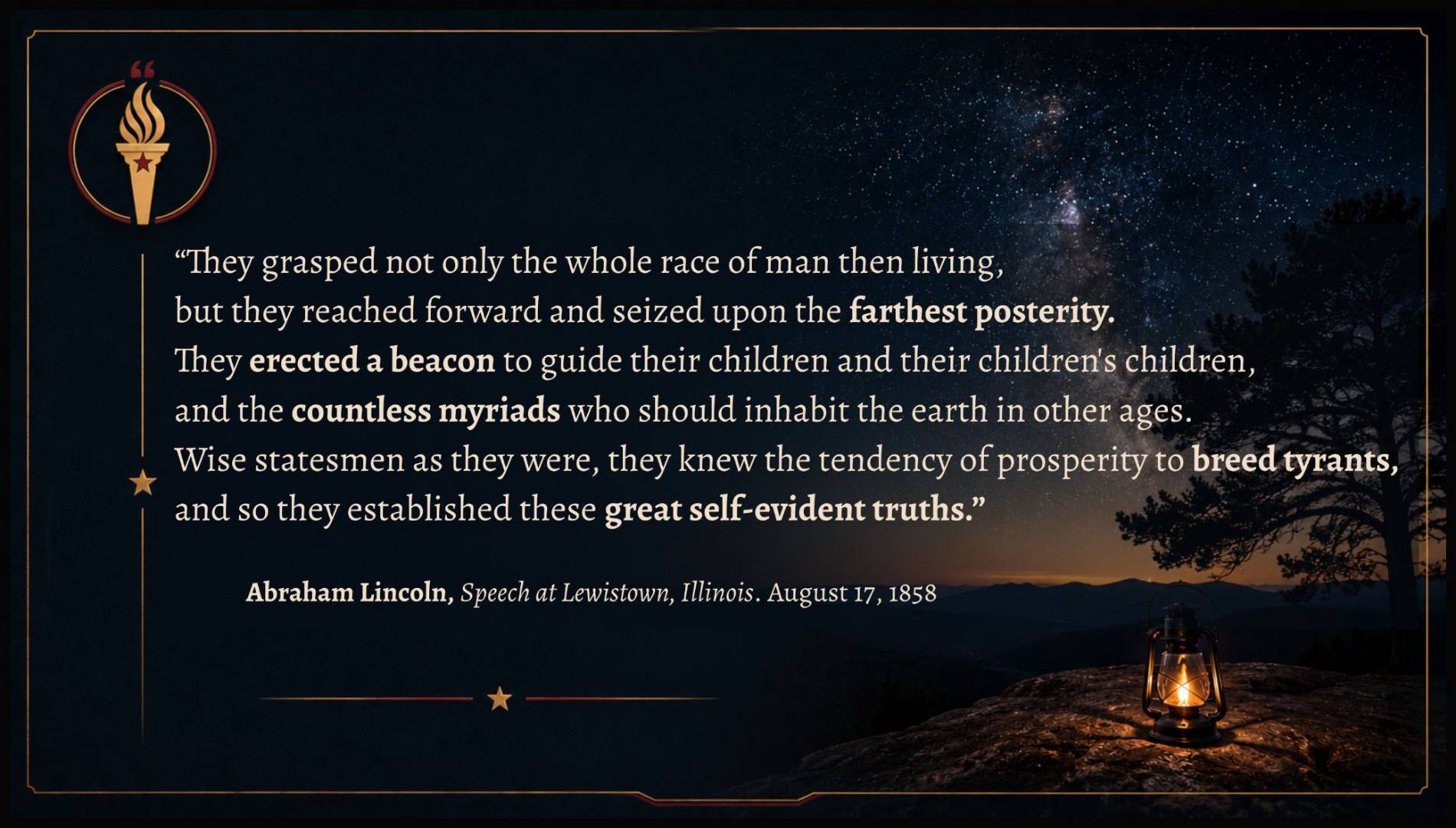
The questions of liberty and tyranny did not begin in 1776. In the Language of Freedom: Founding Principles, students hear from Washington, Jefferson, Locke, Adams, Lincoln, Cicero, Aristotle, and many others, not merely as historical figures but as voices in one unfolding conversation, allowing students to encounter the ideas, follow them across generations, and discover how they came together in the American Revolution.
25 Lessons. 4 Parts. One Story
The story is not sanitized, and the Founding is not presented as perfect. Students encounter the distance that has sometimes existed between America's principles and its practice, and how those same principles gave American's the language with which to challenge injustice and call the nation toward its own ideals. To understand that inheritance, wrestle with it, and carry forward what is worthy is part of an education in liberty.
The aim is not simply to know more. It is to think deeply, articulate what we believe clearly, and develop passion and wisdom for the principles that keep us free.
Part One: The Human Problem
Before we can understand liberty, we must understand what threatens it.
Part Two: The American Answer
The principles that make human freedom possible.
Part Three: Preserving Freedom
The conversation now turns inward towards the formation of the citizen.
Part Four: The American Legacy
The journey concludes where every generation's responsibility begins.
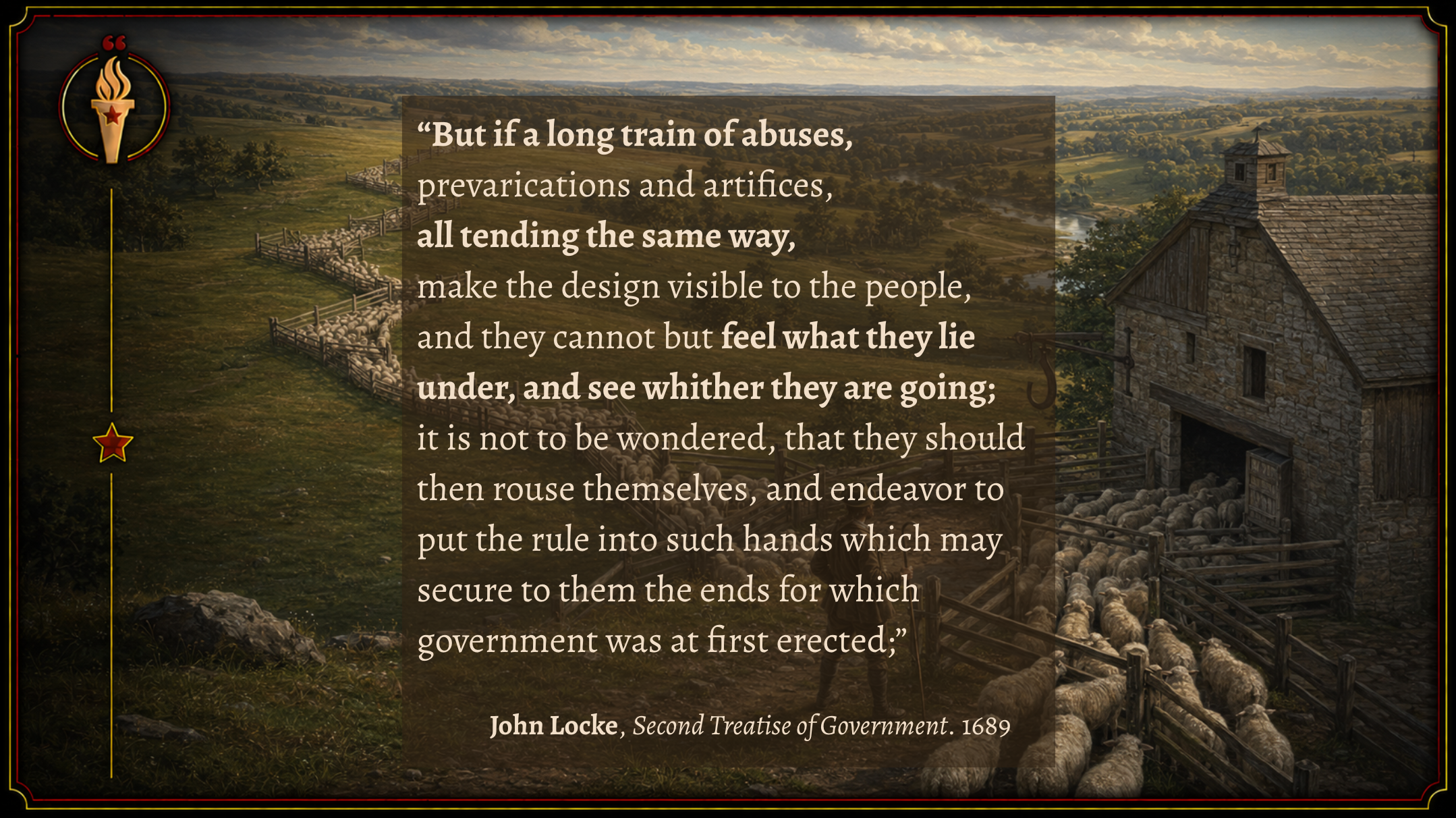
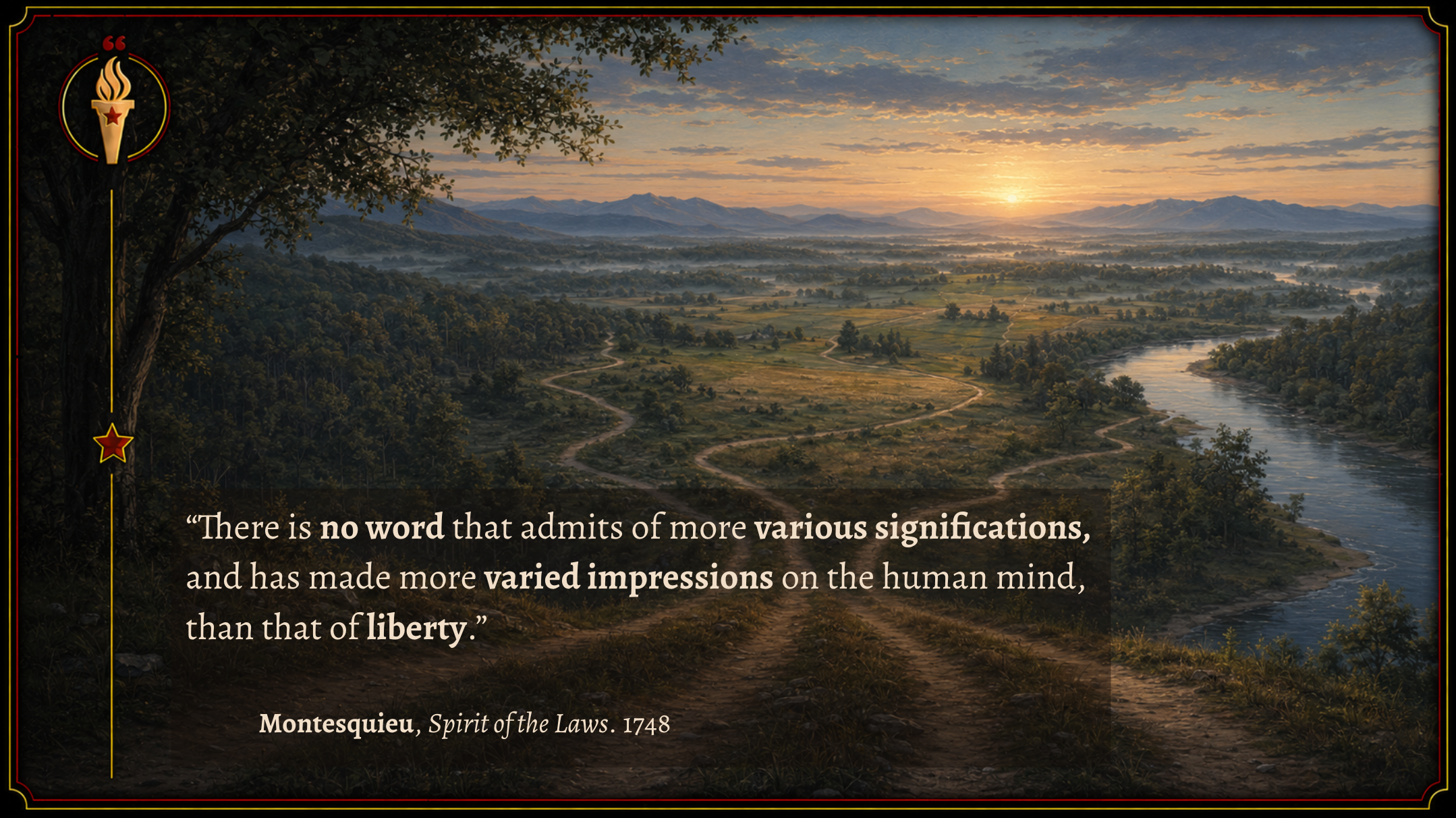
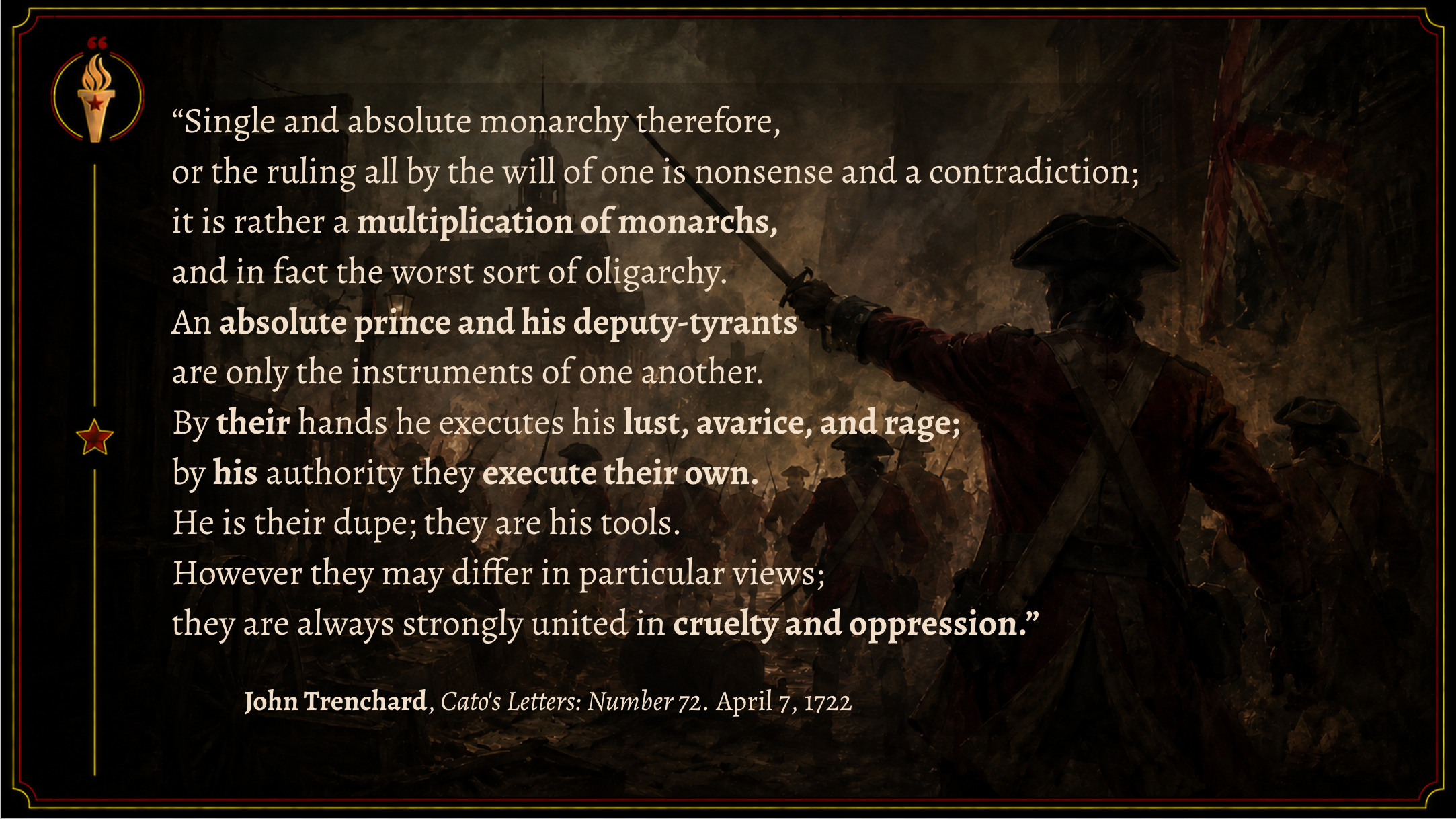
A More Human Way to Encounter Ideas
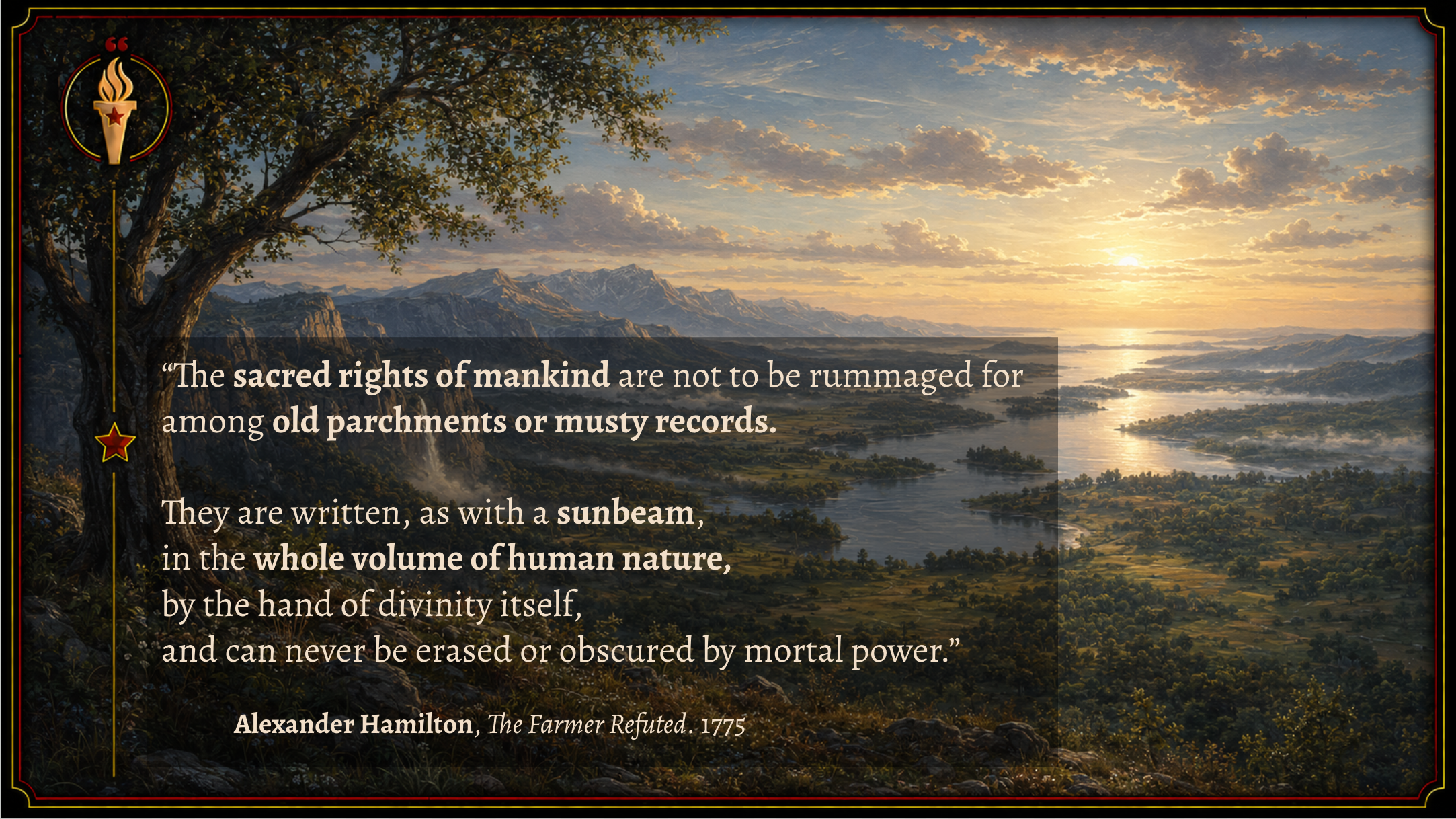
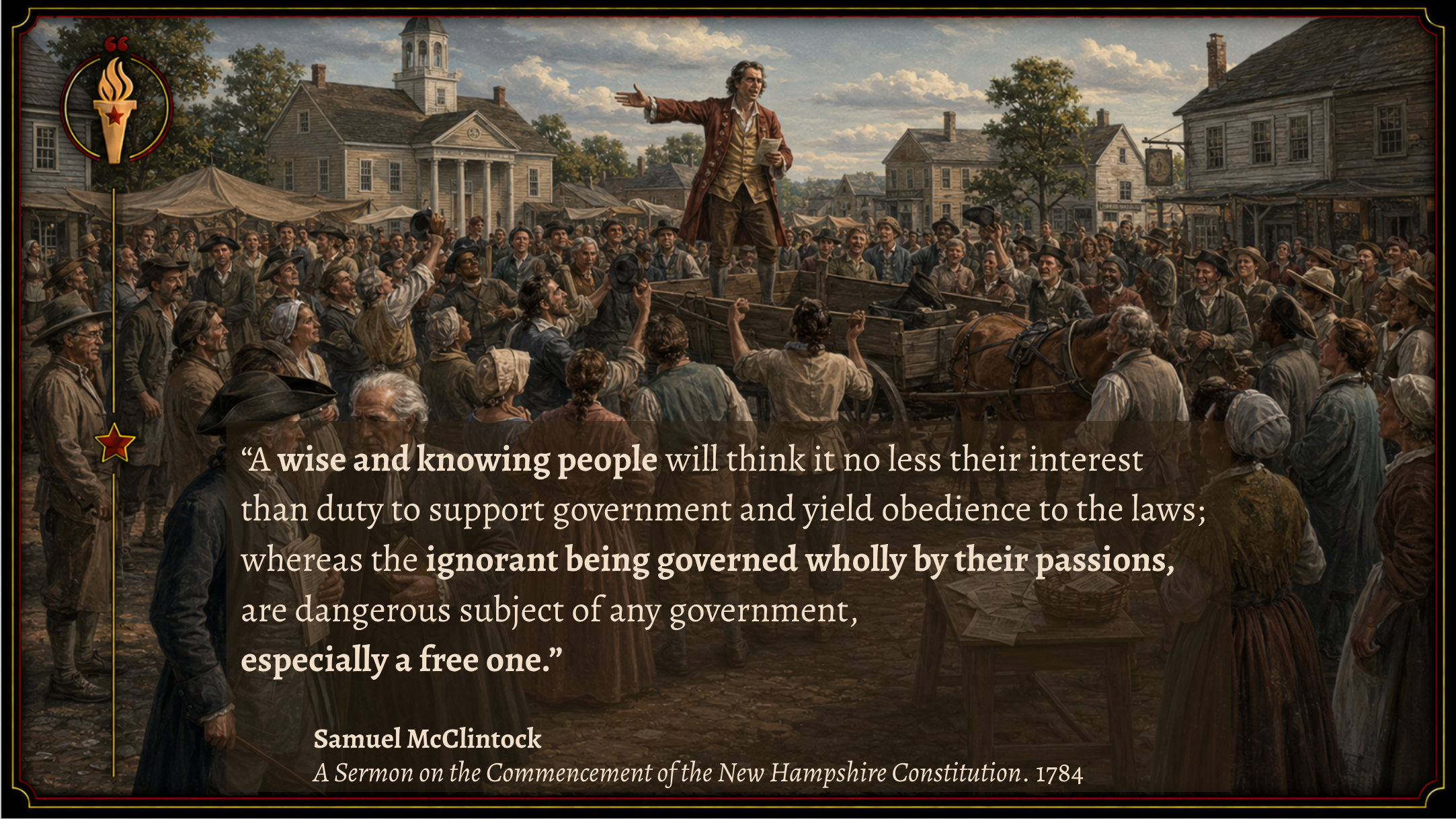
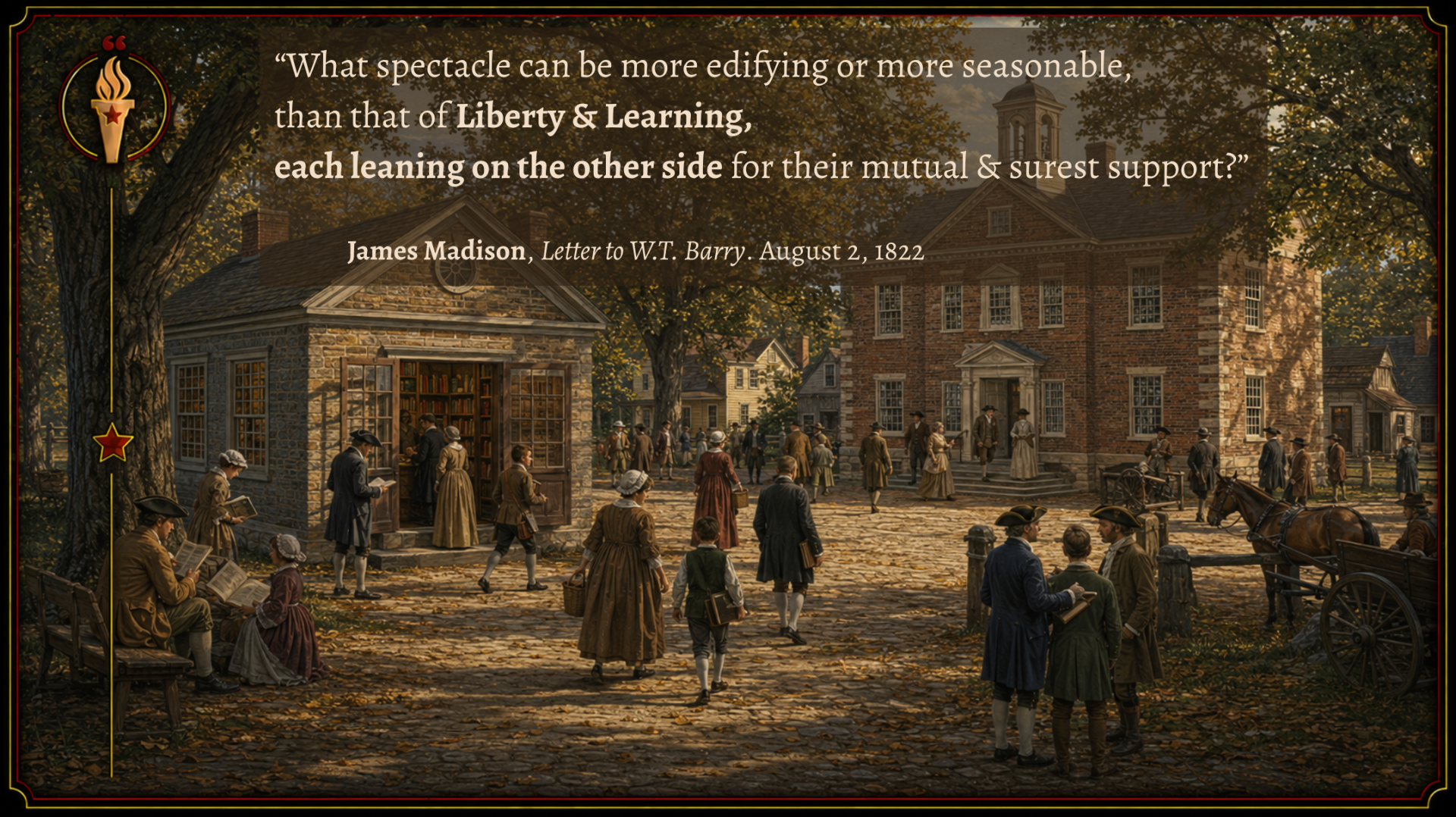
Primary Sources: Let the people who wrestled with these questions speak for themselves.
Guided Narration: Provides context, reveals connections, and guides without simply handing students conclusions.
Original "Paintings": Give abstract principles a visual and human world in which to be contemplated.
Learning Guides: Provide substantial readings, discussion questions, writing prompts, vocabulary, painting analysis, and connections across the curriculum.
Use the whole lesson. Pause it. Pull one source. Assign one question. Spend twenty minutes on a painting. Make it yours.
Where Does This Fit Into Your School?
U.S. HISTORY
Bring Language of Freedom alongside the Colonial and Revolutionary period to explore the moral and intellectual tradition beneath the events students are already studying.
CIVICS / AMERICAN GOVERNMENT
Use the curriculum to establish the philosophical foundations of government, rights, responsibility, authority, and self-government.
HONORS / ADVANCED / ELECTIVE STUDY
Give curious students a deeper primary-source and philosophical experience without requiring teachers to construct an entirely new course.
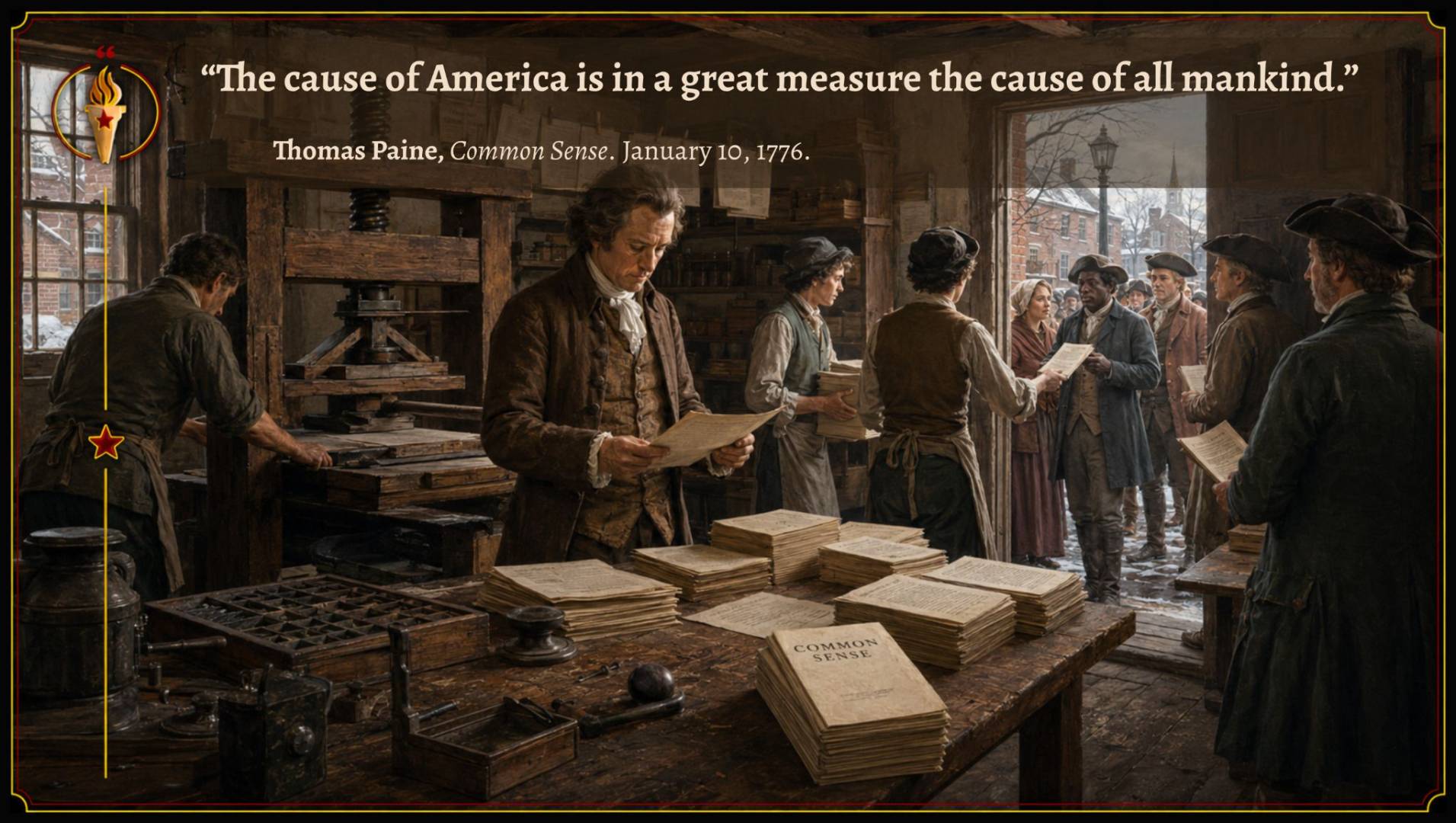
Make it yours.
One class may spend twenty minutes discussing a "painting." Another may follow a primary source into an unexpected conversation. Another may use an entire lesson exactly as designed.
That's part of the joy of teaching. The material gives you somewhere to begin. Your students determine where the conversation goes.
My name is Gary Vesper, creator and teacher of Language of Freedom. I hold a B.A. in History and a Master of Arts in Education, and I've taught American history and government to high school and homeschool students across America.
I love teaching.
The classroom taught me something else: extraordinary teaching requires extraordinary preparation, and teachers rarely get enough time for it.
Language of Freedom gave me the chance to see what could happen if I gave one intellectual journey the time teachers almost never have.
Years of reading. Source hunting. Writing. Teaching. Rewriting. Rearranging. Cutting. Starting over.
All centered on one question:
How could we help young people genuinely encounter the principles of liberty rather than merely learn information about them?
Language of Freedom is my answer. But it didn't begin as an idea on a website. I taught an earlier version in my own American Government classes. I watched students discuss these sources, wrestle with difficult ideas, and engage seriously with questions of liberty and government.
That experience strengthened a conviction that has guided everything I've built since:
Young people are capable and eager to think deeply when profound ideas are presented with clarity, beauty, and respect for their intelligence.
Now I want great teachers to take this somewhere I can't:
into a conversation with their own students.

Don't Take My Word. Teach It.
I'm inviting U.S. History, Civics, and American Government teachers to test-drive the opening Language of Freedom lessons with their students.
Experience the curriculum. Pause it. Discuss it. Challenge it. Use the Learning Guides. See how your students respond.
Then tell me what happened.
Your Classroom Test-Drive
Part One Introduction - The Human Problem
1 minute
Lesson One - Force
25 minutes + Learning Guide
Lesson Two - Lawless
20 minutes + Learning Guide
For teachers, department chairs, curriculum leaders, and school administrators. Interested in trying it with your students?
Email me at [email protected] and I'll personally send you the classroom test-drive.